Case Study of Loader/Unloader (Lifting Equipment) Transferring More Load Mass and Saving Space
Issue
Increasing the Load Mass
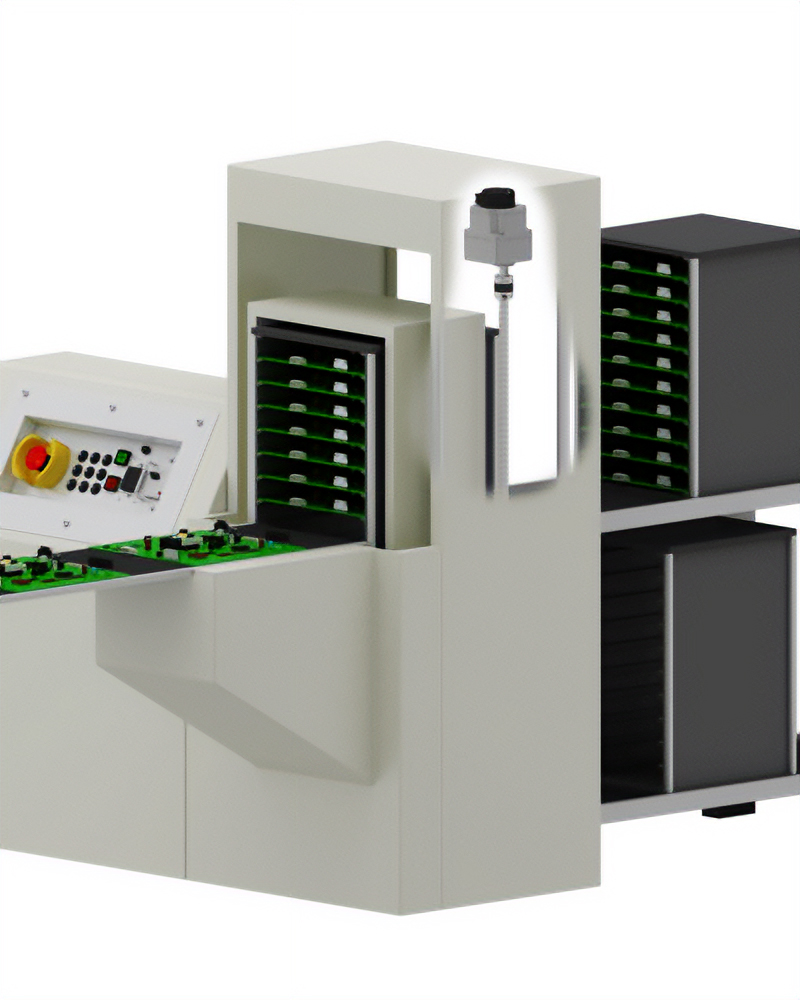
Conventional Equipment
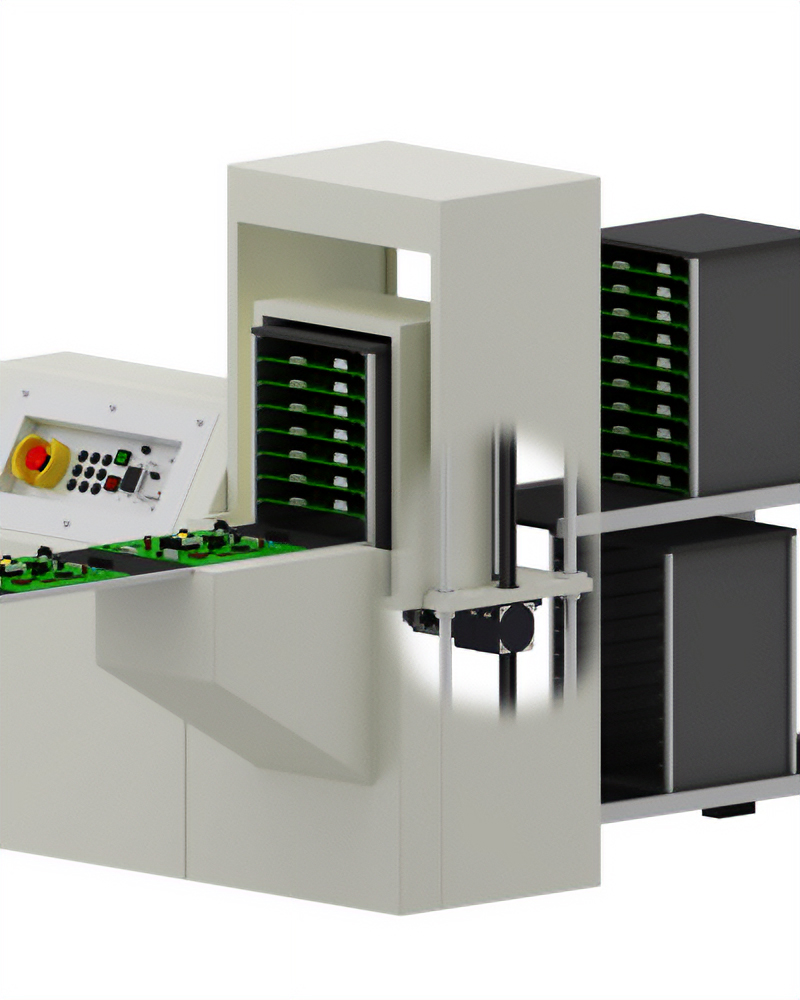
Equipment that uses a ball screw and positioning motor to raise and lower heavy loads.
- Application
- Vertical Transportation of Buckets Containing Loads
Conventional Problems
- In order to increase the load mass, it is necessary to increase the size of the motor and reassess the mechanism’s parts such as guides.
- It may not be possible to install the reassessed equipment due to lack of space
Solution
Rack-and-Pinion System L Series
αSTEP AZ Series Equipped
Capable of Vertical Transfer of up to 100 kg
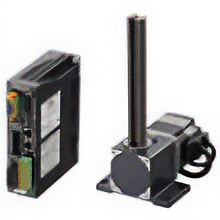
The L Series, which incorporates a positioning motor in a rack-and-pinion mechanism with a large transportable mass, can transport heavy loads up to a maximum of 100 kg.
Specific Application Examples
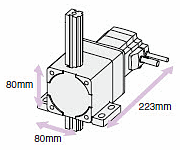
Maximum 100 kg Can Be Transported with a Frame Size 80 mm
Although the linear motion mechanism of the L Series is compact in design, it can transport large loads due to its high strength processing.
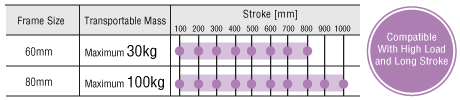
If the mounting does not take moment into account, the transportable mass can be transported as is.
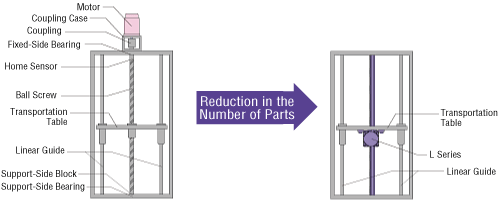
Offers Improved Space Saving over Ball Screw Mechanisms While Increasing Transportable Mass
Products with a rack-and-pinion mechanism allow the body to move by itself if both ends of the rack are fixed.
This eliminates the need for protruding motors and connecting parts, making the equipment more space saving than ball screw mechanisms.
[Configuration examples of cases where the load is driven by the same stroke]
| For Ball Screw Mechanism | For L Series | |
| Number of Components | 8 Points | 2 Points |
| External View |
 |
|
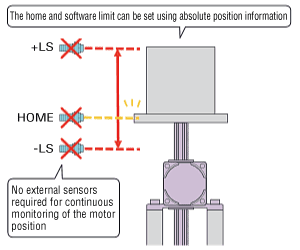
No Need for a Home Sensor or Limit Sensor, and Offers Clean Wiring
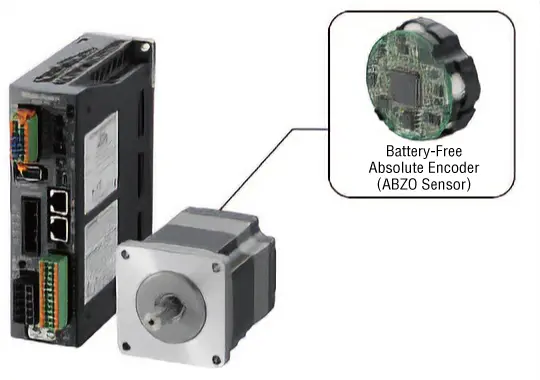
The αSTEP AZ Series used in the motor section is equipped with a mechanical absolute encoder.
As it is able to detect the absolute position of the entire stroke of the L Series, this eliminates the need for position coordinate management via external sensor.
Reducing wiring, increases the degree of freedom in designing the layout of the control cabinet etc., justifying expectations of further space saving.